Francis Jeffers
Francis Jeffers recently opened up about the unexpected phone call that led to his Everton debut and the challenges he faced when leaving his boyhood club for Arsenal. Jeffers, who made his first-team debut for Everton as a 16-year-old on Boxing Day 1997, shared his experiences on the Wayne Rooney Show for the BBC, highlighting the emotional and career implications of his transfer.
Francis Jeffers said: “I never had a mobile phone. It’s Christmas night, I’m just putting a pair of chinos on, I’m just thinking I’ll go have a glass of coke in the Western before I head into town, for a glass of coke in town. My mum or dad shouts to me, the house phone has rang and it’s Howard Kendall. I’m thinking: ‘What have I done? I’ve been off for a few days so I can’t have done anything wrong.’ Howard was unbelievable. I answered the phone and said: ‘Hello boss.’ He said: ‘How are we son?’ I said: ‘Yeah, I’m all right boss, I’m sound.’ He asks: ‘Have you had a good Christmas?’ I said: ‘Yeah, yeah, I’m just having my dinner.’ He says: ‘What are you up to tonight?’ So, I said: ‘I’m just going to chill out with the family, that’s it.’ He replies: ‘You’re not. Get yourself to Bellefield, Big Duncan’s not well.’ I thought: ‘Too right he’s not well, it’s Christmas, he’s not going to be well, is he? He had the same idea as me Dunc!’ He says: ‘Big Dunc has gone down, we need you in the squad tomorrow. We’re leaving Bellefield at 8 o’clock on Christmas night, and going to a hotel in Manchester.’ The chinos are off, the Everton trackie is on. There are no mobile phones or nothing, so I think the lads were waiting for me in the Western.”
Jeffers recalled the moment he was asked to step onto the pitch at Old Trafford, replacing captain Dave Watson. Despite the initial nerves, the experience was a significant milestone in his career. However, the move to Arsenal, while prestigious, came with its own set of challenges.
Francis Jeffers said: “The next day, I’m on the bench and we’re getting beat 2-0 at Old Trafford. We’re walking back up the tunnel at half-time and Everton hadn’t really had a kick, so Howard said to me: ‘Get yourself ready, you’re going on son.’ I s**t myself. Excuse my language, but I did. I wasn’t a big kid, I was skinny and a little runt. I remember warming up and looking down at the Man United players and thinking: ‘Wow, look at the size of them.’ When he said: ‘You’re going on,’ it was like, really, you’ve been dreaming about this your entire life, but now it’s: ‘I’m not sure you know, can we wait until next week when we’ve got Bolton at home.’ He puts me on, 2-0 down, and we end up losing the game 2-0.”
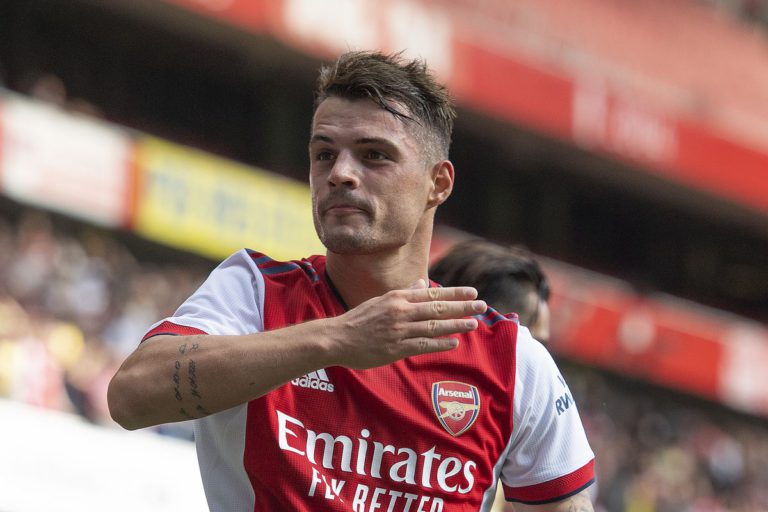
The transition from Everton to Arsenal was not just a change of clubs but a significant turning point in Jeffers’ career. He expressed the emotional struggle of leaving Everton, a club deeply rooted in his identity, and the subsequent challenges he faced at Arsenal.
Francis Jeffers said: “I did have a mobile by this point. I was actually in BCM nightclub in Magaluf. That’s where I was when I was told that this deal is happening at Arsenal, so you better get home. I said: ‘Can it wait until tomorrow? I just am, like him (points at Rooney), we’re Everton people, our families are Everton people, we love Everton. But at the time, it needed money. Every summer there was a sale, or two. It happened to be me, Michael Ball and Richard Dunne. The club needed money to stay afloat. It’s just the way it was. I tried to agree a new deal with Everton. I think they knew as well they were probably going to have to cash in. If I was going to leave Everton, I wasn’t going to anyone who, no disrespect, was mediocre. I wanted to go and play for the best. If it wasn’t Man United or Arsenal, I was probably going to stay at Everton. I told the club that I thought I was at a stage in my career where if I was leaving my boyhood club, and the place where I wanted to be – and I did want to be at Everton – then I was only leaving for the best.”
Jeffers’ story is a poignant reminder of the complexities athletes face when balancing personal loyalty with career advancement. His reflections highlight the emotional and professional challenges that accompany significant career moves in football.
About The Author