Gary Neville
Manchester United has confirmed the departure of Ruben Amorim as head coach after a 14-month tenure at Old Trafford. The decision came following a 1-1 draw against Leeds United at Elland Road, leaving United in sixth place in the Premier League, trailing Liverpool by three points. The club’s hierarchy had recently been questioned about their confidence in Amorim, leading to a candid response from the 40-year-old regarding his role and future at the club.
Ruben Amorim said: “Guys, to stop with that, and I noticed that you received selective information about everything. I came here to be the manager of Manchester United, not to be the coach of Manchester United. That is clear. It’s going to be like this for 18 months or when the board decided to change. That was my point. I want to finish with that. I’m not going to quit. I just want to say that I’m going to be the manager of this team, not just the coach. I was really clear on that. That is going to finish in 18 months, and then everyone is going to move on. That was the deal. That is my job, not to be a coach. If people cannot handle the Gary Nevilles and the criticises of everything, we need to change the club. No, no guys, I would say that I came here to be the manager of Manchester United, not to be the coach. Every department, the scouting department, the sport director needs to do their job. I will do mine for 18 months and then we move on.”
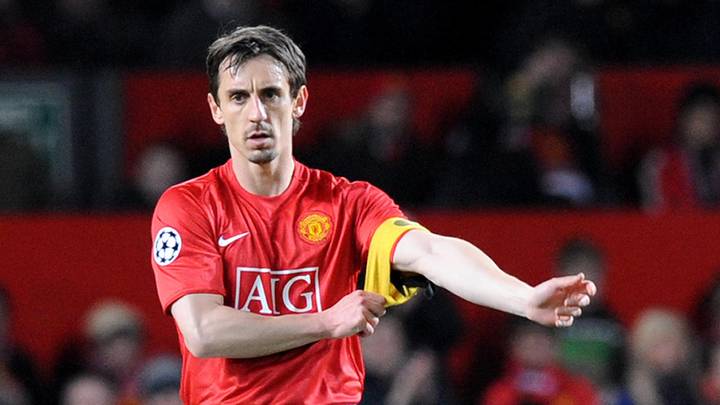
Gary Neville said: “Look, if there was a meeting on Friday morning about the performance against Wolves between the sporting director and the manager – I’d actually have been disappointed if there wasn’t a meeting after the Wolves performance. It seems to me that in the last week, Ruben Amorim has decided that he doesn’t feel supported or he doesn’t feel happy, he’s called it out obviously in press conferences, decided to unleash at times and sort of be emotional and do what he does: I think he’s always been honest, he’s always done it with integrity, he’s always speaking from the heart – we always enjoy his press conferences. But the reality of it is, when you turn on your bosses – it doesn’t matter whether you’re at a football club or you work in Morrisons – if you turn on your bosses, you’re not going to keep your job very long. For me, the meeting between Jason Wilcox and Ruben Amorim after the Wolves game that took place, that absolutely would take place in every single football club. If Salford City had a game that they lost or drew that was bad, there would be a conversation between the sporting department and the manager, just like there would be from the manager to the sporting department if we weren’t getting our targets in the January transfer window. These are conversations that have to happen, there has to be a level of honesty that occurs when there are disappointing results. But some of the performances in the last month… if you look at the Everton game, losing to 10 men when to be fair Ruben Amorim kept three at the back against one and they were basically trying to chase a goal against 10-man Everton. The performance against West Ham – everyone is beating West Ham and Manchester United drew at home and to be fair West Ham could’ve got more out of the game. Everyone is beating Wolves, Manchester United drew against Wolves. So if you look at some of the performances in the last month, they’ve been shocking. However, there have been some bright spots along the way. I actually thought against Leeds it was a decent performance, I thought it was a good point and he could have handled it differently after the game in the press conference but he didn’t. The Wolves game to me seemed like the killer game, it was a bad one.”
Amorim’s tenure at Manchester United was marked by a series of inconsistent performances, with the recent draw against Wolves being highlighted as a pivotal moment. Gary Neville, a former United captain and current Sky Sports pundit, emphasized the importance of internal discussions following poor performances, noting that such conversations are a standard practice in football clubs. Neville also expressed surprise at the timing of Amorim’s departure, suggesting that the recent press conferences had indicated an inevitable conclusion but expected a longer period before any decision was made.
The departure of a manager mid-season often reflects broader challenges within the club’s decision-making processes. Manchester United now faces the task of finding a suitable replacement, a challenge they have encountered before. As the club navigates this transition, fans and pundits alike will be closely watching the developments at Old Trafford.
About The Author