Ruben Amorim
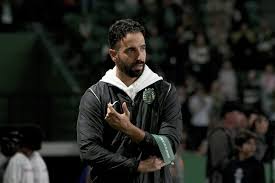
Ruben Amorim, the current manager of Manchester United, recently addressed ongoing issues within the club during a press conference. Amorim emphasized his role as a manager rather than just a coach, highlighting the need for a broader influence over the club’s operations. His comments come amid speculation about his authority and the club’s performance in recent matches.
Ruben Amorim said: “Guys, to stop with that, I noticed that you receive selective information about everything. I came here to be the manager of Manchester United, not to be the coach of Manchester United. And that is clear. I know that my name is not Tuchel, it’s not Conte, it’s not Mourinho, but I’m the manager of Manchester United. And it’s going to be like this for 18 months, or when the board decides to change. So that was my point, I want to finish with that. I’m not going to quit.”
He continued: “I just want to say that I’m going to be the manager of this team, not just the coach. And I was really clear on that. And that is going to finish in 18 months and then everyone is going to move on. That was the deal. That is my job, not to be a coach. If people cannot handle the Gary Neville and the criticism of everything, we need to change the club. No, guys, I just want to say that I came here to be the manager of Manchester United, not to be the coach. And every department, the scouting department, the sports director needs to do their job.”
Amorim added: “I just said about Maresca, once you start this game-playing in your press conferences, something is obviously annoying him, he’s not feeling the support and he’s letting go. Manager is a title that we don’t see anymore. I don’t know what Pep Guardiola is at Manchester City. Manager suggests that he’s saying that he wants to manage more than just the training ground performance. He wants to overlook other parts of the club.”
Gary Neville responded: “It’s not quite that, but it’s something similar in a way that it’s not explicit what it means, but everyone’s having to read in between the lines. It looks to me that he’s not happy about something in the hierarchy. He’s mentioned my name in it as well, apparently. That’s the sort of thing that managers tend to do towards difficult periods, they have a go at pundits. No problem with that whatsoever. I’ve actually been quite supportive of Manchester United’s performances against Bournemouth, Aston Villa, and Newcastle.”
Amorim’s comments reflect a desire for greater control over Manchester United’s broader strategic direction, beyond just coaching responsibilities. His mention of Gary Neville and other pundits indicates a sensitivity to external criticism, particularly following the team’s recent performances. Despite showing strong performances against teams like Bournemouth and Aston Villa, Manchester United struggled against Wolves and a 10-man Everton, which has drawn scrutiny.
The situation highlights the complexities of modern football management, where managers often seek influence over various club departments, including recruitment and academy operations. Amorim’s insistence on his managerial role suggests a push for a more integrated approach to club management, akin to the roles held by figures like Pep Guardiola at Manchester City.
As the season progresses, Amorim’s ability to navigate these internal dynamics and external pressures will be crucial for Manchester United’s success. The club’s fans and stakeholders will be keenly observing how these managerial challenges unfold and impact the team’s performance on the pitch.
About The Author