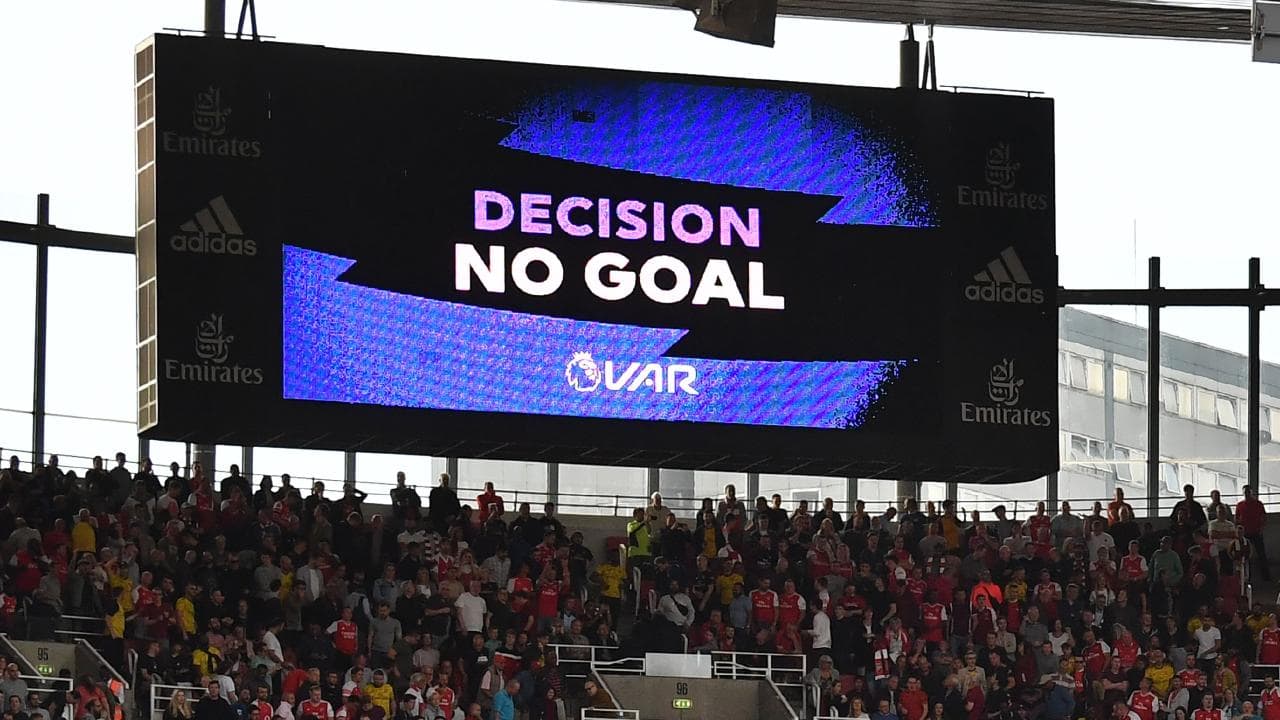
VAR NO GOAL
**
Bobby Madley, a referee known for his controversial decisions and current role in the EFL, has expressed his dissatisfaction with the Video Assistant Referee (VAR) system in football. Madley, who also serves as a fourth official in the Premier League, highlighted the ongoing debates surrounding the divisive technology and its impact on the sport.
Madley said: “As a fan, hate it, hate it. Love the Championship, love League One, I’m still a fan. I love League One because you score a goal, you look at the referee… you look at the assistant, he hasn’t put his flag up, it’s a goal. And that Sergio Aguero moment that we had years ago, where the referee was blowing, nobody’s flagging, they’ve won the league.”
Madley continued: “You are never, ever going to see that again in football, because they’ll score in that moment and what will happen is the referee will stand there, everyone will panic, they’re just checking potential offside 15 seconds ago. It takes that emotion away from it and football is a game where there could be one moment in the game, one goal, and that’s it. To take that emotion away, to have to wait and wait, and what feels like an eternity, as a fan, I’m not a huge fan of that experience.”
Madley is perhaps best remembered by Newcastle fans for his controversial decision to send off Fabricio Coloccini in the 2015 Wear-Tyne derby. The decision led to Sunderland’s victory and ultimately contributed to Newcastle’s relegation that season. The red card was later overturned, but the incident remains a significant moment in Madley’s career.
Madley was dismissed as a Premier League referee in 2018 after a video emerged of him appearing to mock a disabled person. He briefly relocated to Norway before returning to officiate in England in 2020, where he took charge of games in League One and League Two. He was promoted to refereeing Championship games at the start of the current campaign.
Madley remarked: “There’s so much money in football, it’s business driven. So any mistake is perceived to cost people money. And I don’t think most football fans were clambering over each other to get video technology. The players weren’t, the referees weren’t, but the people who run football, they are multimillion-pound and billion-pound people, and they had issues with referees getting things wrong.”
He added: “All of a sudden you’ve got to process ‘I’ve made a wrong decision’ in front of 75,000 people, in front of 100 million people watching. What if I make another one? You know, I can’t keep making wrong decisions because sometimes the players are going to say, ‘How many more?’ If you’re sent to the screen for a second time, the trust weighs a little bit and that’s a dangerous place to be as a referee. When people stop trusting your decision-making, that can be a very dangerous place. That’s why we have so much training with VAR and that’s why we have that bar set as a clear and obvious error.”
The Professional Game Match Officials Limited (PGMOL), the body responsible for referees in English football, has been approached for their perspective on the matter. Madley’s reflections underscore the ongoing challenges and debates surrounding VAR’s role in modern football.
About The Author