Roy Keane Nicky Butt
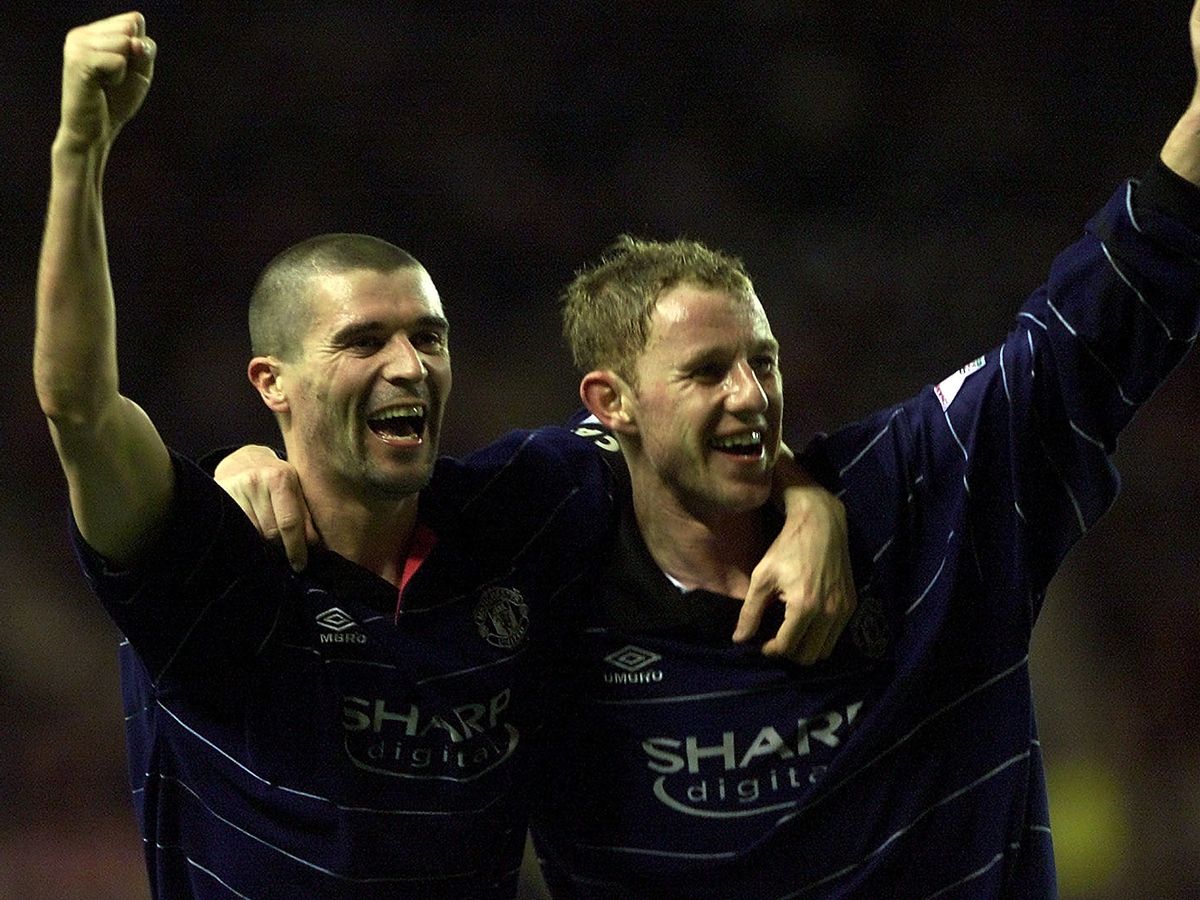
Nicky Butt, the former Manchester United midfielder, has candidly shared his experiences following his move to Newcastle United in the summer of 2004. After a successful stint at Manchester United, where he secured 15 major trophies, including six Premier League titles and a historic treble in the 1998/99 season, Butt transitioned to Newcastle United. The move came after Newcastle’s impressive fifth-place finish in the Premier League under Sir Bobby Robson. Butt spent six seasons at St James’ Park, culminating in helping the team secure promotion back to the Premier League in the 2009/10 campaign.
Nicky Butt said: “I went to Newcastle and it was a real shock for me if I’m honest with you. When I was at [Manchester] United, and it is easy to build good teams when you are winning, but when I went to Newcastle I was surprised by the disconnect. You had the old pros, mostly British, then you would have the younger lads who liked a night out and were single which is fine, that’s what happens, and then the foreign lads. You have that dynamic in every single football club but you don’t have it where it is not connected and you could see it. You had like a crew of British 27-year-old plus blokes who would go for a pint and a bite to eat and then you had the younger ones who would be more single, no kids, no wife and enjoying their lives and then you had the foreign lads. Again, that is the norm. The norm is not what we had [at Manchester United]. I went to Newcastle, loved the football club when I was there and really enjoyed my time there. The fans were amazing and there were ups and downs but it was really weird when I think I never went out once in five years where all the squad was together.”
Butt’s reflections highlight the contrasting squad dynamics he encountered at Newcastle compared to his time at Manchester United. At United, the team cohesion was evident, with players regularly socializing together, a factor Butt found lacking at Newcastle. This disconnect within the squad, characterized by distinct groups of older British players, younger singles, and foreign players, was a significant change for Butt. Despite these challenges, Butt expressed his fondness for Newcastle United and its passionate fan base, noting that his time there was filled with both highs and lows.
This revelation from Butt sheds light on the importance of team unity in football clubs, a factor often overshadowed by on-field performances. His experiences underscore the challenges players face when adapting to new environments and the critical role of team dynamics in achieving success. As Newcastle United continues its journey in the Premier League, insights like these from former players can provide valuable lessons in fostering a cohesive and supportive team culture.
About The Author