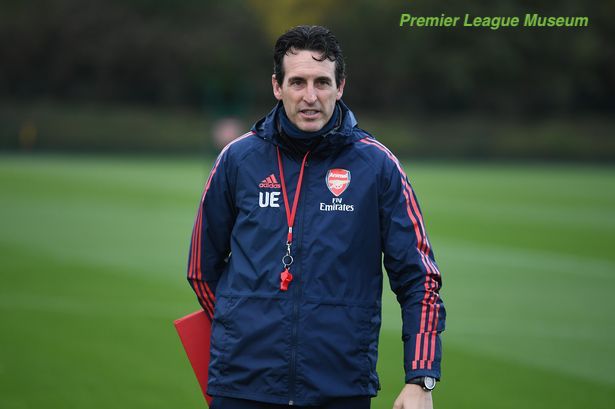
Unai Emery
Harvey Elliott, who joined Aston Villa on the deadline day last month, has been a topic of discussion regarding his role and performance under manager Unai Emery. Since his arrival, Elliott has made five appearances, scoring Villa’s first goal of the season in a Carabao Cup match against Brentford, although the team eventually lost on penalties. Despite his promising start, Elliott has only been in the starting lineup twice, once against Brentford and another time in a victorious match against Fulham.
Unai Emery said: “I am being very demanding myself, to choose the right players to start and the players for the bench and substitutes. Firstly, it is always about trying to get the best performance collectively, through individual players. Harvey is a number 10 in our structure, in our shape. He plays some matches and there is still an adaptation to add himself in our structure and with the task we have. And at the same time, we have other players who can play as the number 10. They are performing well. I have different players. This is the main reason why he has not been playing minutes in the last matches. He has to continue working like he is doing in the training sessions and getting his confidence in the performances we need from him.”
Emery further commented on Elliott’s potential versatility: “His qualities, in my opinion, are more to play as a number 10. He can maybe play on the right side, trying to build our structure with him, like we do with John McGinn. We could, but maybe he will need more time than McGinn doing this role. At the beginning, I called him and we signed him thinking he would play as a number 10 and get the performance we need from him to play consistently.”
Elliott’s integration into the team has been a gradual process, as Emery balances the need for immediate performance with long-term development. The manager has highlighted Elliott’s role as a number 10, a position that requires significant adaptation within the team’s structure. With competition from players like Emiliano, John McGinn, Youri Tielemans, and even Ross Barkley, Elliott faces a challenging path to secure a regular starting position.
Emery’s comments suggest a strategic approach to player development, emphasizing the importance of training and confidence-building. While Elliott’s primary role is envisioned as a central playmaker, Emery has not ruled out the possibility of him adapting to a wider position, albeit with more time and adjustment. The manager’s focus remains on harnessing Elliott’s potential to contribute effectively to the team’s overall performance.
About The Author